
Dermaplaning at Home vs. Professional: What Chicago Estheticians Actually Recommend
Dermaplaning at home has become one of the most searched skincare topics. There are real differences in tools, technique, results, and safety that are worth understanding before you decide. This guide breaks down both options clearly, including when DIY is genuinely acceptable and when it is not.
The Core Difference: Tool Quality and What It Means for Your Skin
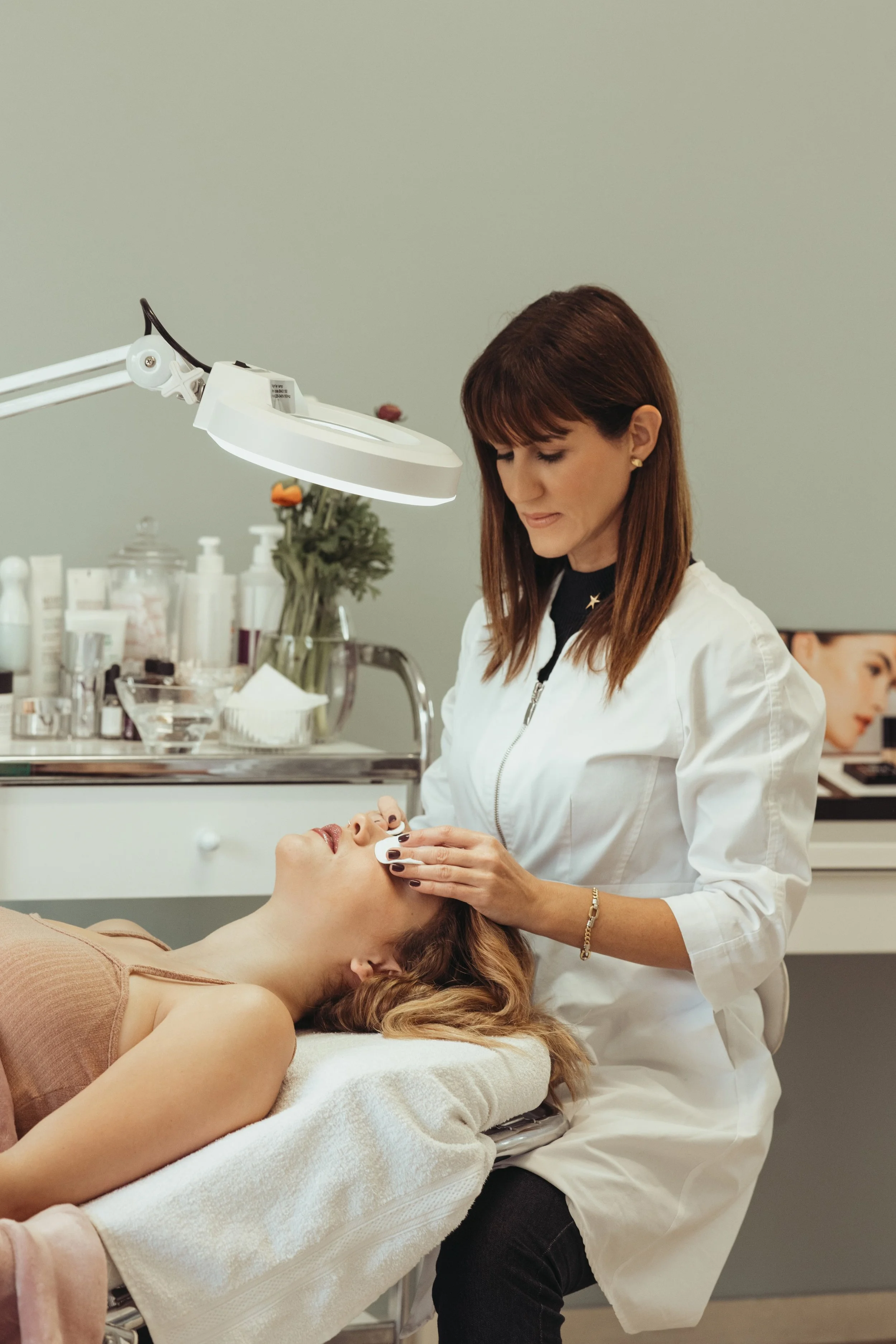
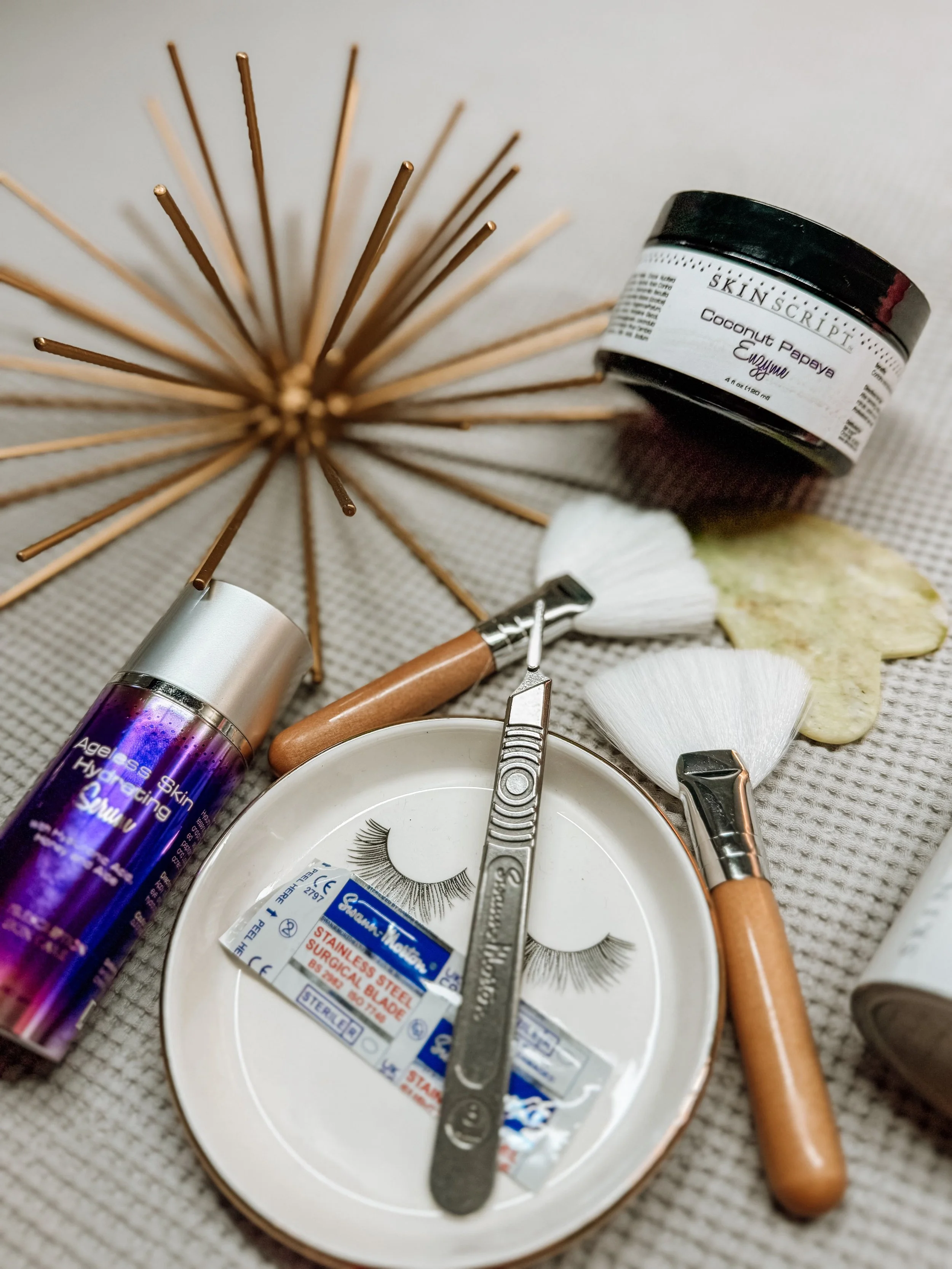
Professional dermaplaning uses a sterile, medical-grade surgical scalpel with no plastic guard, sharper than any consumer tool, applied at a precisely controlled 45-degree angle. At-home tools feature duller blades with safety guards designed to limit exfoliation depth. The consumer blade removes surface peach fuzz reasonably well but does not clear the stratum corneum with the same completeness as a professional scalpel. Results, duration, product absorption, and skin barrier impact all follow from tool quality.
Technique: Why the Same Motion Produces Different Outcomes
Estheticians are trained to maintain consistent pressure across varying facial topographies. The jawline, temples, and chin each require technique adjustments that take time to learn. Professionals also work against the direction of hair growth for more thorough peach fuzz removal. At-home users typically work with the hair grain for safety, which limits effectiveness. Uneven pressure in a DIY setting is the leading cause of micro-nicks, patchy texture, and missed areas.
Results Comparison: What Each Option Actually Delivers
Professional dermaplaning removes approximately two to three weeks' worth of dead skin cells per session. Results from professional treatment typically last four to eight weeks. At-home results are visible but more superficial and shorter-lived. The product absorption benefit is measurably greater after professional treatment because deeper exfoliation clears more of the surface barrier. For makeup application smoothness and visible glow, both approaches deliver improvement. Professional treatment consistently delivers more of each outcome.
The Hygiene and Infection Risk Difference
Every professional session uses a fresh sterile blade in a controlled environment. At-home tools require thorough sanitization with 70% isopropyl alcohol before each use and blade replacement after every session. Reusing blades or applying them to unclean skin introduces bacteria into freshly exfoliated pores, a particular risk for acne-prone skin. Most at-home users underestimate sanitation requirements. Storing tools near the shower further degrades blade safety. Hygiene discipline is what separates a safe DIY session from a genuinely risky one.
Over-Exfoliation and Skin Barrier Risk: The Most Underreported Danger
Dermaplaning disrupts the outermost skin barrier layer. The specific risk of at-home tools is frequency. Because the experience is less intensive than a professional session, users are tempted to repeat every few days rather than allowing the skin to fully restore. Dermatologists recommend at-home dermaplaning no more than every one to two weeks, and even that interval requires monitoring for over-exfoliation signals: persistent redness, increased sensitivity, dryness, or tightness. Professional treatment is calibrated to the skin's observed recovery timeline.
When At-Home Dermaplaning Is Actually Acceptable: the Real Criteria
At-home dermaplaning is acceptable under specific conditions: skin is healthy and not in an active breakout or sensitivity flare; no rosacea, eczema, psoriasis, or compromised skin barrier is present; tools are high quality with single-use blades, sanitized with 70% isopropyl alcohol before use, and applied to completely dry skin only. Frequency is kept to no more than every one to two weeks. First-time users benefit from starting with a professional session before attempting home maintenance.
How to Dermaplane at Home Safely: the Correct Step-by-Step Protocol
Start with clean, completely dry skin. Sanitize the tool with 70% isopropyl alcohol before use. Use short, light upward strokes with minimal pressure, letting the blade glide rather than press. Work with the direction of hair growth for safety. Never pass over the same area twice in one session. Follow immediately with a hydrating serum containing no active acids. Apply SPF the next morning without exception. Replace the blade after every use. Do not attempt dermaplaning at home around the eyes, lips, or any area with active blemishes. These are the steps professional estheticians recommend for clients maintaining results between sessions.
What Chicago Estheticians at CM Salon & Spa Actually Recommend
The consistent recommendation from estheticians with 45+ years combined experience: start with a professional session before attempting at-home maintenance. The first session establishes a skin baseline, confirms candidacy, identifies any contraindications, and demonstrates what correct exfoliation actually feels like. At CM Salon & Spa, that process begins with a complimentary consultation at the Lakeview location on Halsted Street. At-home tools work best as a maintenance bridge between professional sessions, not as a replacement for them. The right protocol looks different for every client, which is exactly why the assessment comes before any recommendation is made.
Cost Comparison: What You Actually Pay Over Time
At-home dermaplaning tools range from a few dollars to $30 or $50, but blades require replacement after every single use, adding meaningful ongoing cost. Professional sessions at Chicago-area spas reflect esthetician expertise, products used, and any add-on treatments included. For clients booking six professional sessions annually versus dermaplaning at home twice weekly, the annual cost differential narrows considerably when blade replacement and quality tools are factored in. Professional treatment also prevents the cost of correcting barrier damage from at-home overuse.
The Hybrid Approach: Using Both Options Strategically
The most effective and most commonly recommended framework is a hybrid one. Start with a professional session that establishes the skin baseline, confirms candidacy, and demonstrates correct technique. Between professional sessions, use a quality at-home tool conservatively, no more than once every one to two weeks, on dry and healthy skin only. The professional session performs the substantive exfoliation. The at-home sessions maintain the result. This framework delivers better outcomes than either option used exclusively.
Skin Types That Should Always Choose Professional: No Exceptions
Regardless of tool quality or technique confidence, at-home dermaplaning is not appropriate for active acne breakouts. It is also not appropriate for active rosacea, eczema, or psoriasis flares; a compromised or visibly reactive skin barrier; anyone currently using isotretinoin or within the post-treatment waiting period; or skin with fresh sunburn, open wounds, or active irritation. For these conditions, a professional assessment is the only appropriate path. The esthetician determines whether and when dermaplaning is suitable at all.
What the Honest Comparison Tells You About Dermaplaning at Home
Professional dermaplaning delivers better results, greater safety, and a skin assessment that dermaplaning at home cannot replicate. At-home dermaplaning is a viable maintenance tool between sessions when candidacy criteria are met, sanitation is rigorous, and frequency is controlled. For first-time users, anyone managing acne-prone or reactive skin, and those with complex skin concerns, professional treatment is the right starting point. The clearest way to know which approach fits your skin is a consultation with an experienced esthetician who assesses before recommending. That clarity costs nothing, and it is the appropriate first step before attempting dermaplaning at home.
Frequently Asked Questions
-
A regular multi-blade razor is not a dermaplaning tool. Standard razors have multiple stacked blades designed to pull and cut hair at the root. Dedicated single-edge dermaplaning blades designed for facial use are the appropriate consumer option. Using a standard body or face razor for dermaplaning increases the risk of over-exfoliation, micro-cuts, and uneven coverage. The tool type is not interchangeable.
-
Dermatologists and estheticians generally recommend at-home dermaplaning no more than every one to two weeks. The skin needs time to rebuild between sessions. Repeating before that restoration is complete leads to persistent redness, sensitivity, and barrier compromise. The clearest signs that you are dermaplaning too frequently are skin that feels constantly irritated, looks raw, or becomes increasingly reactive to products it previously tolerated. When in doubt, extend the interval. Allowing the skin to fully settle before the next session produces better results than frequent shallow passes.
-
At-home dermaplaning delivers visible improvement: smoother surface texture and reduced peach fuzz. Results are generally less thorough and shorter-lasting than a professional session. The tool and technique gap means at-home exfoliation removes less of the dead cell layer per pass. For targeted concerns such as acne scarring, fine lines, or significant uneven texture, professional treatment delivers meaningfully better outcomes. At-home dermaplaning is best understood as a maintenance tool, not a performance equivalent.
-
Sensitive skin can tolerate dermaplaning, but it requires more caution in a home setting than in a professional one. A trained esthetician can evaluate sensitivity in real time and adjust pressure and product selection based on the skin's immediate response. Those with sensitive skin who want to try at-home dermaplaning should use only gentle, single-edge blades, avoid active ingredients for 48 to 72 hours after each session, and monitor carefully for signs of over-irritation. Anyone with reactive skin should begin with a professional session.
-
No oil or product should be applied to the skin before using a dermaplaning blade. The treatment requires completely dry skin, and oil creates a slippery surface that reduces blade control and increases the risk of nicks. After the session, a lightweight facial oil or hydrating serum is appropriate and beneficial, as freshly exfoliated skin absorbs products more effectively. Rosehip oil, squalane, and jojoba oil are commonly used post-dermaplaning. Any post-treatment oil should be fragrance-free and free of active ingredients to avoid irritating the freshly cleared surface.
-
Dermaplaning and chemical exfoliants should not be used on the same day or in close sequence. Combining two forms of exfoliation within the same session or within 48 hours significantly increases the risk of skin barrier disruption, redness, and sensitivity. If a chemical exfoliant is part of your routine, pause it for at least two to three days before dermaplaning and wait 48 to 72 hours after the session before reintroducing it.
