
What Is Dermaplaning? Everything You Need to Know Before Your First Treatment
Dermaplaning sounds more alarming than it is. The treatment uses a sterile surgical blade to remove dead skin cells and peach fuzz from the surface of the skin. This guide covers everything worth knowing before your first session: what the treatment does, who it suits, what results to expect, and how to care for your skin after.
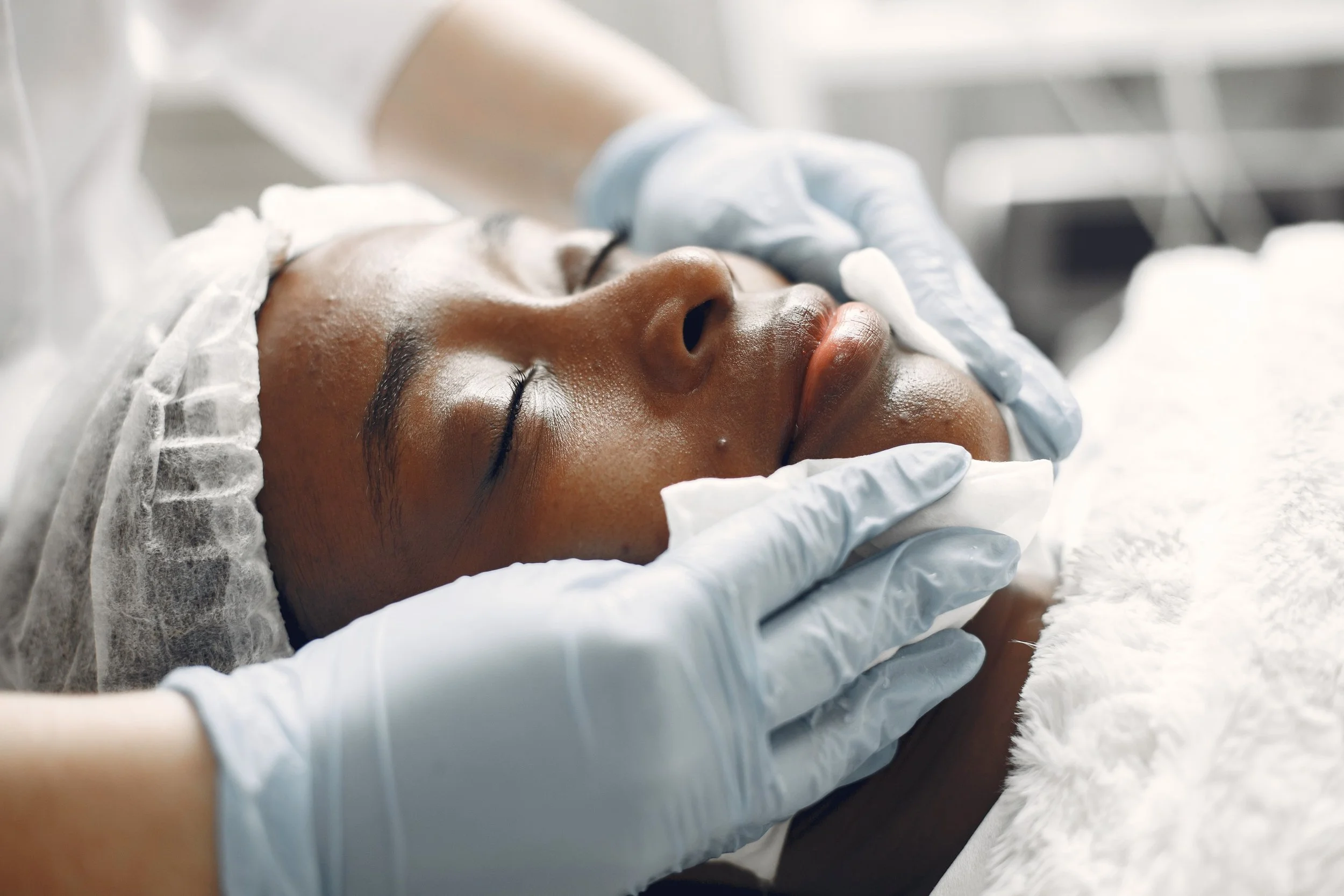
What Is Dermaplaning and How Does It Work?
Dermaplaning is a manual physical exfoliation method performed by a licensed esthetician using a sterile, medical-grade surgical scalpel held at a 45-degree angle. The blade glides across the skin's surface, removing the outermost layer of dead skin cells, known as the stratum corneum, along with fine vellus hair simultaneously. It uses no suction, no chemicals, and no abrasive materials. The result is freshly revealed skin beneath the surface layer, with no recovery time required. The instrument is purpose-built for clinical skin treatment, not a consumer razor adapted for the face.
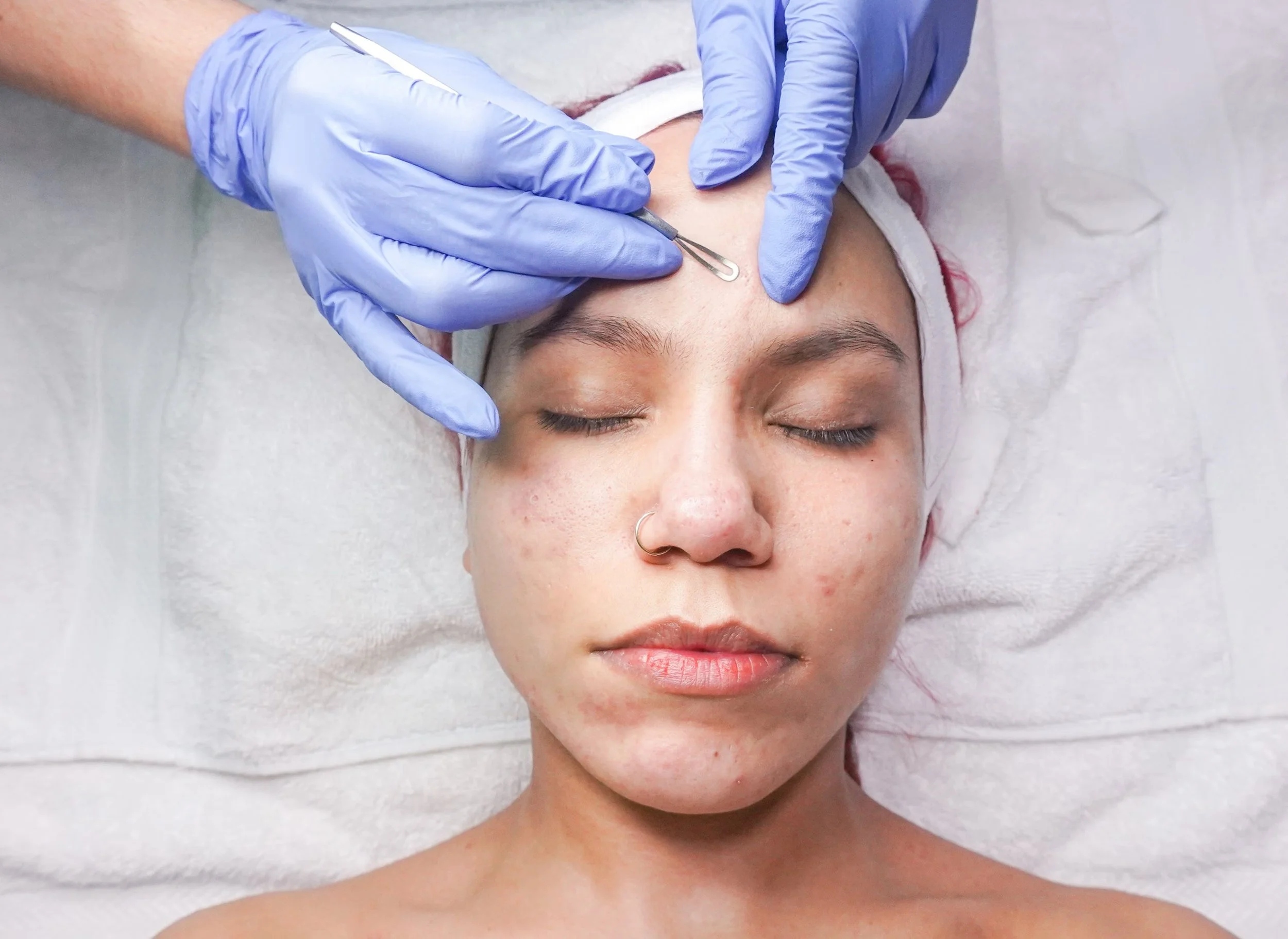
The Benefits of Dermaplaning and What It Actually Does for Your Skin
Dermaplaning delivers several simultaneous outcomes beyond hair removal. Removing the stratum corneum smooths texture and brightens dullness caused by dead cell accumulation. It also increases product absorption: serums and moisturizers penetrate more effectively once the surface barrier is cleared. Makeup applies more evenly without peach fuzz causing uneven product distribution. The removal of vellus hair reduces the fine facial shadow it creates, improving skin definition. Results are visible immediately after treatment, with no waiting period for the benefits to appear.

Who Is a Good Candidate for Dermaplaning and Who Should Skip It?
Dermaplaning suits a wide range of skin types: dry, dull, combination, and sensitive skin all respond well. Those seeking smoother texture, better product performance, or a pre-event glow are strong candidates. Dermaplaning is pregnancy-safe because it involves no chemical ingredients. Those who should avoid treatment include anyone with active acne, rosacea flares, eczema, psoriasis, or compromised skin. A qualified esthetician conducts a skin assessment before every session to confirm appropriateness.
What Happens During a Professional Dermaplaning Session: Step by Step
The session begins with a brief skin assessment and consultation, followed by a thorough double cleanse. The skin is dried completely before the blade is used. The esthetician holds the scalpel at a 45-degree angle and works across the face in short, controlled upward strokes. Most clients describe the sensation as a light feathering or gentle scratching, not pain. The session typically takes 30 to 45 minutes. Immediately after, targeted serums are applied, followed by SPF to protect the freshly exfoliated surface.
What Results Should You Expect and How Long Do They Last?
Skin appears smoother, brighter, and more even immediately after a dermaplaning session. Full results, including reduced texture and a sustained glow, typically last four to eight weeks depending on skin type and individual cell turnover rate. Vellus hair regrows gradually over the course of a month. Most estheticians recommend sessions every four to six weeks.
The Biggest Dermaplaning Myth: Does Peach Fuzz Grow Back Thicker or Darker?
The belief that dermaplaning causes facial hair to grow back thicker or darker is not supported by biology. Dermaplaning removes vellus hair at the surface only. It does not reach the follicle, which is where hair growth characteristics are determined. Hair thickness and color are governed by genetics and hormones, neither of which is affected by surface cutting. The perception of coarser regrowth arises because the newly grown tip is blunt rather than tapered, not because the hair has changed.
At-Home Dermaplaning vs. Professional Treatment: What Is the Difference?
At-home dermaplaning tools use smaller, consumer-grade blades designed for safety over precision. Professional treatment uses a sterile, medical-grade surgical scalpel applied with trained technique at a controlled 45-degree angle. The esthetician's skill in maintaining consistent, even pressure while adjusting for facial contours is what produces the depth and coverage that at-home tools cannot replicate. At-home tools can deliver light surface exfoliation. For anyone seeking meaningful results, professional treatment is the recommended starting point.
What to Expect from a Professional Dermaplaning Facial at CM Salon & Spa
At CM Salon & Spa, dermaplaning begins with a skin assessment that determines whether the treatment is appropriate for the client's current skin condition. The team's 45+ years combined experience means contraindications such as active breakouts or sensitivity flares are identified before any instrument approaches the skin. Located at 3418 N Halsted Street in Chicago's Lakeview neighborhood, the salon has served clients since 2005. A complimentary consultation is the recommended first step for anyone considering dermaplaning for the first time, with no commitment required before the assessment is complete.
How to Prepare for Your Dermaplaning Appointment and What to Avoid Beforehand
Stop using retinol, vitamin C, and chemical exfoliants at least five to seven days before the appointment. Skip waxing in the treatment area for at least a week prior. If the skin is in an active inflammatory phase with breakouts, reschedule rather than proceed. Avoid heavy sun exposure in the days leading up to the session. Arriving without makeup is preferable, though a thorough cleanse at the start of the appointment is standard. Disclose all current topical prescriptions at intake: some require a longer product-free window before treatment is safe.
Dermaplaning Aftercare: What to Do and Avoid in the 48 to 72 Hours After Treatment
Apply broad-spectrum SPF every morning for at least a week after treatment. The freshly exfoliated skin is significantly more sun-sensitive than usual. Avoid retinol, glycolic acid, and vitamin C for 48 to 72 hours post-session. Skip makeup for the rest of the appointment day. Use only a gentle, non-active moisturizer in the post-treatment window. Change your pillowcase that night. Avoid intense exercise, saunas, and steam rooms for 24 hours. Do not use physical scrubs for at least one week.
Dermaplaning vs. Other Exfoliation Treatments: Which Is Right for You?
Dermaplaning compared to a chemical peel: dermaplaning is physical exfoliation; peels dissolve the surface layer using acid, penetrating more deeply but requiring more downtime. Dermaplaning compared to microdermabrasion: both are physical exfoliation methods, but microdermabrasion uses suction and an abrasive tip rather than a blade. Dermaplaning compared to hydradermabrasion treatment: HydraFacial adds simultaneous serum infusion, and many clients combine it with dermaplaning or a chemical peel for enhanced results across multiple skin concerns.
What Dermaplaning Delivers and Why a Consultation Is the Right First Step
Dermaplaning is a well-established, non-invasive exfoliation treatment that produces immediate results with no downtime. Smoother texture, a visible glow, and improved product absorption are delivered in a single session. The hair regrowth concern has no basis in how vellus follicles actually work. The right starting point is always a consultation with a licensed esthetician who assesses skin condition before recommending any protocol. For clients in Chicago's Lakeview neighborhood, that step is accessible and requires no commitment beyond the conversation. The most important thing to know about dermaplaning is that preparation and professional assessment are what determine the outcome.
Frequently Asked Questions
-
Most clients describe dermaplaning as painless. The sensation during treatment is typically a light feathering or gentle scraping feeling across the skin's surface. Some clients find areas close to fine lines or the nose slightly more sensitive, though uncomfortable rather than painful is the more accurate description. A very slight numbness may follow the session as the vellus hairs that carry surface nerve receptor signals are temporarily removed. This resolves naturally in the days after treatment as the stratum corneum rebuilds. A skilled esthetician adjusts pressure and technique continuously based on the client's feedback throughout the session.
-
Most estheticians recommend dermaplaning every four to six weeks. Scheduling sessions more frequently does not accelerate results and can temporarily over-exfoliate the skin, weakening the barrier. The ideal interval depends on individual skin type, how quickly peach fuzz regrows, and how the skin responds after each session. Clients with oilier skin or faster cell turnover may find a slightly shorter interval appropriate. A skin assessment at each visit helps calibrate the right frequency.
-
Applying makeup for the rest of the day following a dermaplaning session is not recommended. The skin is freshly exfoliated and more permeable than usual, making it temporarily more vulnerable to bacteria and pigment introduced by cosmetics. After the initial 24-hour window, makeup application is generally appropriate and most clients find that foundation applies noticeably more smoothly than before treatment. For the first application post-treatment, mineral-based makeup is preferable.
-
Dermaplaning pricing varies by provider type, location, and whether the treatment is combined with other services. At professional spas and medspas in Chicago, the cost reflects the esthetician's training, the time required, and the medical-grade sterile instruments used in a professional setting. Pricing typically differs when dermaplaning is part of a combination treatment such as a chemical peel or hydradermabrasion. A complimentary consultation is the appropriate first step to understand what treatment approach is recommended for your skin and what the associated investment looks like before any commitment is made.
-
For clients without active acne, dermaplaning typically reduces rather than increases congestion risk by removing the dead cell layer that contributes to clogged pores. However, the freshly exfoliated skin is temporarily more vulnerable to bacterial exposure. For clients with active acne at the time of the session, dermaplaning is contraindicated. The blade can spread bacteria across the face and worsen existing breakouts. This is why a pre-treatment skin assessment is an essential first step, not an optional one.
-
Dermaplaning and dermabrasion are both skin resurfacing procedures, but they differ significantly in depth, method, and recovery. Dermaplaning uses a blade to remove only the superficial outermost layer of dead skin cells and vellus hair. It is non-invasive with no downtime. Dermabrasion is a surgical procedure that uses a rotating instrument to remove deeper layers of skin and requires meaningful recovery time. Microdermabrasion sits between the two: it is non-surgical and uses an abrasive tip with suction, but does not remove vellus hair. Dermaplaning is the gentlest of the three and is well suited to regular maintenance treatment without recovery time.
