
Ash Blonde vs. Honey Blonde vs. Platinum: Which Shade Is Right for You?
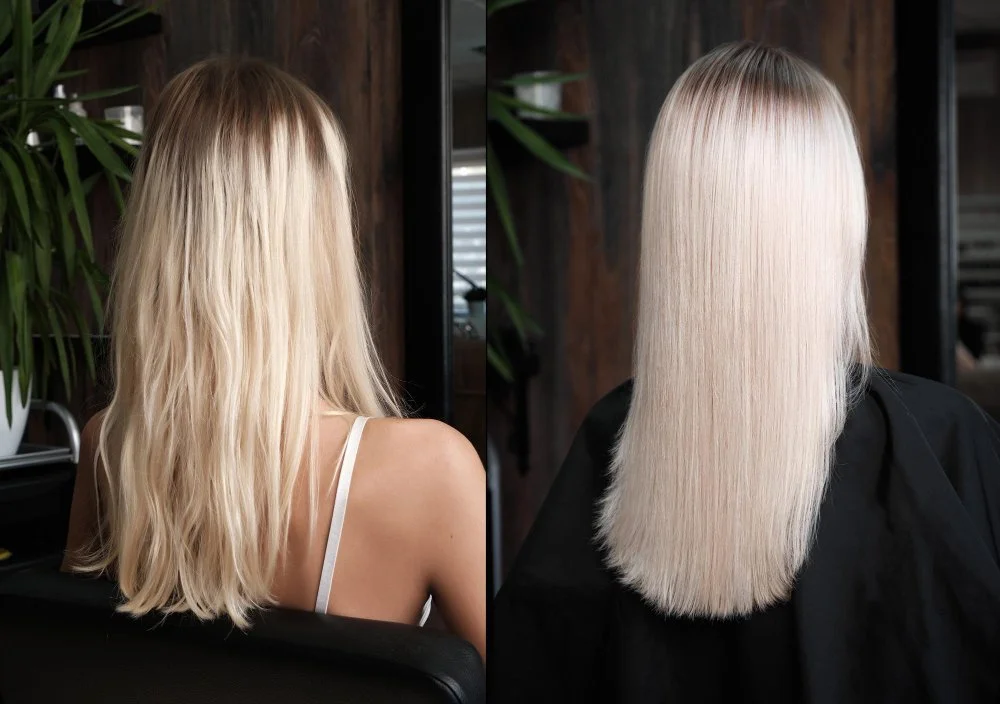
Ash blonde carries silver undertones for a polished, modern finish. Honey blonde runs golden and sun-kissed for the most natural look. Platinum pushes toward near-white for a full commitment statement. Understanding the different shades of blonde matters because the right choice depends on three factors: your skin tone, your starting hair color, and how much maintenance you are willing to take on.
The Three Major Blonde Families
The different shades of blonde fall into three families defined by undertone and lift level. Ash blonde sits at level seven to nine with cool silver undertones that read modern and polished. Honey blonde sits at level six to eight with warm golden undertones, making it the most natural-looking option. Platinum blonde requires maximum lift to level ten or beyond, producing a near-white shade with the highest maintenance commitment. Each has a different starting hair compatibility and a different annual cost profile.
Ash Blonde — The Cool, Modern Blonde
Ash blonde is built for cool or neutral undertones, fair to medium complexions, and anyone fighting brass. The technique is typically balayage, ash-blonde highlights, or an all-over toner applied between levels seven and nine. Maintenance is moderate but consistent: purple shampoo twice weekly is non-negotiable, and a professional gloss every eight weeks keeps tone from drifting warm. Ash blonde grows out gently because cool tones fade toward beige rather than orange, giving a softer window between appointments.
Honey Blonde — The Warm, Lived-In Blonde
Honey blonde hair color is the easiest of the three to wear and maintain. It suits warm and olive undertones, golden skin, and clients wanting a sun-kissed look that appears effortless. The technique is usually balayage or face-framing highlights on a natural brown or dark blonde base. Maintenance is the lightest: a gloss refresh every ten to twelve weeks, purple shampoo only if brass appears, and a grow-out pattern so soft it blends into your natural base without a visible root line.
Platinum Blonde — The Statement Blonde
Platinum blonde hair is the boldest choice and highest commitment in the blonde family. It suits cool undertones and fair complexions, but more than anything, it suits clients fully prepared for the maintenance it demands. The technique is full-head lightening, often requiring two to three sessions from a dark base, followed by a cool toner for an icy finish. Maintenance is the heaviest: purple shampoo two to three times weekly, a gloss every six weeks, and root bleach every four to six weeks.
How to Choose Between Ash, Honey, and Platinum Blonde

The decision runs through four filters. Skin tone: cool undertones point to ash or platinum, warm to honey, neutral opens all three. Starting hair: level six or higher reaches any shade in one session; levels four to five need two sessions; levels one to three need three or more sessions for platinum. Maintenance tolerance: low means honey, medium means ash, and high means platinum. Match skin tone first, filter by starting hair, then adjust for the different shades of blonde maintenance you can realistically sustain.
Finding Your Undertone — The Three Test Self Assessment
Three quick tests confirm your undertone before you commit. The vein test: blue or purple veins in natural light indicate cool undertones, green indicates warm undertones, and a mix indicates neutral undertones. The jewelry test: silver flatters cool, gold flatters warm, both working equally, signals neutral. The paper test: hold white paper next to your bare face—pink cast means cool, yellow means warm. Whichever undertone two out of three tests confirm is your answer. This single step eliminates two-thirds of blonde types before you walk into any salon.
Starting Hair Color — Which Blonde You Can Actually Reach
Chemistry sets hard limits regardless of preference. At levels one to three, platinum needs three to four sessions, ash needs two to three, and honey needs one to two. At level four to five, any shade is reachable in one to two sessions. At level six to seven, any shade in one session. At level eight and above, transition between shades in a single gloss. Ash blonde vs. platinum blonde often comes down to starting level math more than personal taste.
Maintenance Comparison — Which Blonde Needs the Most Upkeep?
Purple shampoo frequency: honey is optional; ash requires it twice weekly; platinum, two to three times. Salon gloss refresh: honey every ten to twelve weeks, ash every eight, platinum every six. Root touch-up: honey rarely needed, ash every eight to ten weeks, platinum every four to six. Annual salon visits: honey averages four to five, ash six to eight, platinum ten to twelve. The low-maintenance winner is honey. The high-maintenance outlier is platinum by a wide margin.
Damage Reality — How Each Shade Stresses Your Hair Differently
Honey blonde causes the least damage, requiring minimal lift from a warm brown base with less frequent chemical exposure. Ash blonde sits in the middle, needing more lift to eliminate natural warmth plus ongoing toning that adds cumulative cuticle stress. Platinum carries the highest damage load: maximum lift across the entire head, often over multiple sessions, with full-head bleach at every root touch-up. Bond builders reduce damage across all three, but cannot eliminate it entirely at platinum levels.
Which Blonde Is Right for You
Ash blonde vs. honey blonde vs. platinum is a decision about undertones and commitment, not just shade preference. The right blonde matches your undertone, starting hair, maintenance tolerance, and budget—all four together. Honey is the low-commitment choice that grows out beautifully. Ash is the polished, cool-toned middle ground. Platinum is the fashion-forward, high-commitment statement. The right blonde is the one you can maintain without resenting the schedule. A consultation is where that decision gets confirmed.
Book Your Blonde Consultation at CM Salon in Chicago
Every blonde appointment at CM Salon & Spa in Lakeview begins with a complimentary consultation, during which your undertone, starting level, and maintenance tolerance are assessed before any formula is mixed. Our colorists specialize across all three shade families and confirm pricing, session count, and shade target in the chair—never over the phone. Chicago clients receive a realistic timeline adjusted for local factors, including hard water and winter dryness. The consultation is no pressure and carries no obligation. Book your complimentary consultation here.
Conclusion
The different shades of blonde each carry distinct undertones, maintenance schedules, and cost profiles. Honey-blonde hair color is the low-maintenance choice, ash-blonde highlights offer a polished middle ground, and platinum-blonde hair makes the boldest statement. Whether you're weighing ash blonde vs honey blonde or considering ash blonde vs platinum blonde, the decision starts with your undertone, starting level, and lifestyle. Book a complimentary consultation at CM Salon & Spa to find your shade.
-
Ash blonde vs honey blonde comes down to undertone: ash carries cool silver and gray undertones, while honey carries warm golden and amber undertones. Ash suits cool complexions and honey suits warm complexions. On maintenance, ash requires purple shampoo twice weekly and a gloss every eight weeks, while honey needs only an optional purple shampoo and a gloss every ten to twelve weeks. Ash fades toward beige, honey fades toward soft golden brown. Skin tone is the primary factor between these two, and the vein test is the fastest way to determine which direction your undertone leans.
-
Honey-blonde hair color is the standout for warm skin tones because its golden and amber undertones harmonize naturally with warm complexions rather than clash. Caramel and beige blonde also work for warm undertones if honey feels too intensely golden. Ash blonde and platinum generally do not flatter warm skin tones because their cool silver base can create a washed-out or gray-tinged effect. The one exception is high-contrast platinum with a deliberately dark root, which can work on warm skin for a fashion-forward look. The vein test and jewelry test confirm your undertone before you commit.
-
Yes. Platinum requires the most lift of any blonde shade, pushing hair to level ten or beyond, which typically demands two to three sessions from a brunette starting point. Honey blonde requires the least lift and, therefore, the least overall damage exposure. Ash blonde falls in the middle, with a moderate lift required to reach the right base, plus ongoing toning that stresses the cuticle over time. Bond builders like Olaplex and K18 reduce damage across all three shades but cannot eliminate it entirely at platinum levels. Chicago's hard water compounds platinum damage specifically by stripping moisture from an already compromised cuticle.
-
Honey blonde is the clear low-maintenance winner of the three shade families. The natural grow-out blends into a warm brown base without creating a harsh root line, so root touch-ups are rarely needed. Annual salon visits average four to five, compared to six to eight for ash and ten to twelve for platinum. Purple shampoo is optional, not required. Gloss refresh intervals range from 10 to 12 weeks, compared to 6 to 8 weeks for ash and platinum. If your primary decision factor is keeping the maintenance schedule light, honey is the answer every time.
-
Yes. Most clients shift between shades over the years as trends change, seasons rotate, or personal style evolves. Ash to honey is the easiest transition and can be done in a single gloss service that warms the existing tone. Honey-to-ash requires a toner appointment to neutralize the warmth, usually lasting one to two hours in the chair. Any shade to platinum requires additional lifting sessions because of the distance to level ten. Platinum to any darker shade requires color deposit rather than lift and is typically completed in one session. A colorist preserves hair health across transitions by spacing sessions and using bond builders throughout the process.
-
Ash blonde is the standout for rosacea and pink-flushed skin because cool silver and gray undertones actively neutralize redness rather than amplify it. Honey blonde and warm platinum both emphasize warmth or high contrast that can make facial redness more visible. Beige blonde, which sits slightly warmer than ash, is a strong alternative if pure ash feels too cool or steely against your complexion. Avoid golden, honey, and warm platinum shades for pink complexions as a general rule. Both makeup artists and professional colorists consistently recommend ash-toned shades for this specific undertone challenge, and ash blonde highlights offer a softer entry point than an all-over application.
