
Orange Hair After Bleaching? Here's How to Fix It (Chicago Colorist Guide)

If you’re dealing with orange hair after bleaching, you’re not alone—and more importantly, it’s fixable. This is one of the most common results people experience after lightening, especially if the lift didn’t go far enough.
The key is understanding why it happened and choosing the right way to fix it without causing further damage. Whether you’re trying to correct it at home or considering a professional service in Chicago, this guide walks you through exactly what to do next.
Why Does Hair Turn Orange After Bleaching?
To understand how to fix orange hair after bleaching, you first need to understand what caused it.
Hair contains natural pigments called melanin, which break down in stages when exposed to bleach. Darker hair contains more eumelanin and pheomelanin, which means it has deeper red and orange undertones.
As hair lifts, it moves through predictable levels:
Level 1–3: very dark brown to black
Level 4–5: red undertones
Level 6–7: orange
Level 8: yellow-orange
Level 9–10: pale yellow
If your hair turned orange, it means the bleach stopped lifting at level 6 or 7. This is especially common with brunette hair.
Other contributing factors can include:
mineral buildup from hard water
previous box dye or color layering
chlorine exposure
uneven application of bleach
The important thing to understand is that orange hair doesn’t mean your hair is ruined. It simply means the lift wasn’t completed, and your hair needs the correct next step.
Orange vs. Brassy vs. Yellow — Which One Do You Actually Have?
Before choosing a solution, it’s important to identify your tone correctly. Many people misdiagnose orange as yellow, leading them to use the wrong products.
Here’s how to tell the difference:
Orange hair (level 6–7): strong, deep warmth; requires blue-based correction
Brassy hair (level 7–8): moderate warmth; may respond to blue shampoo or gloss
Yellow hair (level 9): pale warmth; responds to purple shampoo
The color wheel rule is simple: you neutralize a tone using its opposite. Blue cancels orange, while purple cancels yellow.
Using purple shampoo on orange hair won’t fix the issue—and in some cases, it can make the color look dull or uneven.
How to Fix Orange Hair — Your Options Ranked by Severity
There are several ways to fix orange hair from bleach, but the right option depends on how strong the orange is and how healthy your hair feels.
Blue Shampoo and Toning Shampoo
Blue shampoo is best for very mild warmth, not true orange.
It works as a maintenance step rather than a full correction. If your hair is slightly warm but close to your desired level, using a blue shampoo once or twice a week can help keep tones balanced.
It will not significantly shift strong orange tones.
At-Home Blue Toner
If you’re wondering how to tone orange-bleached hair, a blue-based toner is the correct direction.
A toner works by depositing cool pigment to neutralize warmth. However, choosing the right toner depends on your current lift level. Using a toner that’s too dark or too light can lead to uneven or muddy results.
A strand test is essential before applying toner to your entire head. Timing also matters—leaving toner on too long can shift the color too far into ash or gray.
Re-Bleaching (If Hair Is Strong Enough)
Re-bleaching is sometimes necessary if the hair hasn’t lifted enough, but it must be approached carefully.
You should wait at least 7 to 14 days before bleaching again and assess your hair’s condition. If your hair stretches excessively or feels weak when wet, it’s not ready.
The goal is to lift the hair to a pale yellow level before toning. Skipping this step and applying toner to orange hair often leads to uneven results.
This is where many DIY attempts go wrong, leading to more complex color correction.
Going Darker to Cover Orange
If your hair is too compromised to safely lighten again, going slightly darker is a valid option.
Choosing a cool-toned dark blonde or light brown shade can neutralize orange while improving overall appearance. Avoid warm or golden tones, as they can enhance the orange rather than cancel it.
This option is often overlooked but can be the healthiest choice for damaged hair.
When to Stop DIYing and See a Professional Colorist
If you’ve tried to fix orange hair after bleaching and the results aren’t improving—or getting worse—it may be time to seek professional help.
Signs you should consider a colorist include:
uneven tones from roots to ends
visible banding or patchiness
Previous box dye history
hair that feels stretchy or breaks easily
toner that didn’t take evenly
A professional colorist approaches orange hair color correction differently. They assess your hair’s condition first, perform strand tests, and apply targeted toners or lighteners to specific sections.
They may also incorporate bond-repair treatments to protect your hair during the process.
If you’re in Chicago, the next step is typically a consultation where your hair is evaluated and a correction plan is created.
How to Keep Orange from Coming Back After Correction
Once your hair has been corrected, maintenance plays a major role in keeping unwanted warmth away.
To maintain your results:
Use a blue shampoo once or twice per week
Switch to color-safe, sulfate-free products
Limit heat styling or use heat protection
Consider a shower filter if you have hard water
Schedule periodic toning refresh appointments
Color-treated hair requires a different routine than natural hair. With the right care, you can keep your tone balanced and avoid repeating the correction process.
How We Fix Orange Hair at CM Salon & Spa
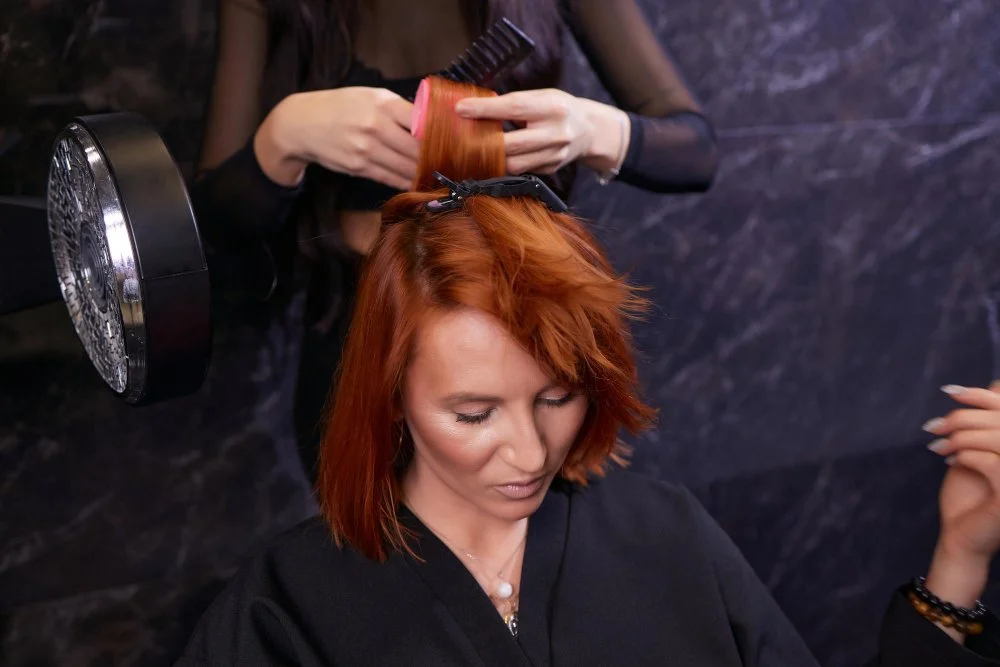
At CM Salon & Spa, correcting orange hair starts with understanding the full picture before applying any product. Our color specialists assess your hair’s current level, tone, and integrity, as well as your color history. This allows us to determine whether toning, lightening, or a staged correction is the safest and most effective approach.
Many clients come in after attempting to fix orange tones at home. In these cases, we focus on restoring balance while protecting the hair from further stress. Our goal is always healthy, even color that aligns with your long-term vision, not just a quick fix.
Conclusion
Orange hair after bleaching can feel frustrating, but it’s a very common and fixable stage in the lightening process. The key is to understand what your hair needs next, rather than rushing into another treatment.
Whether you choose a careful at-home approach or work with a professional colorist, taking the time to assess your hair’s condition will lead to better, healthier results. With the right correction and maintenance, you can achieve a balanced, refined color that looks intentional and polished.
-
Hair turns orange after bleaching because the lightening process removes natural pigment in stages, not all at once. Darker hair contains strong underlying red and orange pigments that are exposed as bleach lifts the color. When the process stops at levels 6 or 7, orange tones become visible. This doesn’t mean your hair is damaged—it simply means it hasn’t been lifted far enough to reach yellow or pale blonde. In most cases, the solution involves either further controlled lighting or the use of the correct toner to neutralize the underlying warm tones.
-
Purple shampoo is often misunderstood as a universal fix for unwanted warmth, but it is specifically designed to neutralize yellow tones, not orange. If your hair has a strong orange undertone, purple shampoo will not correct it and may even leave the color looking dull or slightly muddy. Orange tones require blue-based products to balance them properly. Identifying your exact tone—whether it’s orange, yellow, or brassy—is essential before choosing a product. Using the wrong toner or shampoo is one of the most common reasons at-home corrections fail or produce uneven results.
-
Waiting before re-bleaching is essential to protect your hair from damage. Most professionals recommend waiting at least 7 to 14 days to allow moisture and strength to return. During this time, it’s important to use conditioning and bond-repair treatments to improve hair resilience. Before attempting to bleach again, perform a simple stretch test on wet hair. If the strand stretches excessively or feels weak, your hair is not ready for another chemical process. Rushing into re-bleaching too soon can lead to breakage, which makes correction more difficult and often more expensive to fix professionally.
-
To fix orange hair, you need a blue-based toner, as blue sits opposite orange on the color wheel and neutralizes it effectively. However, selecting the right toner isn’t just about choosing a blue formula—it must also match your current hair level. If the hair hasn’t been lifted enough, toner alone may not fully correct the color. Professional toners offer more precision and can be customized for different sections of the hair, ensuring even results. Incorrect toner selection or over-processing can lead to overly ashy, gray, or uneven tones, which may require additional correction.
-
The cost to fix orange hair at a salon in Chicago depends on how intense the orange tone is and on the steps required to correct it. Mild cases that only need toning or glossing typically range from $150 to $300. More complex corrections that involve additional lightening, color balancing, and toning can range from $300 to $600 or more. In cases where the hair has previously been box-dyed or has uneven lifting, multiple sessions may be needed. A consultation is usually required to assess your hair and provide an accurate estimate based on your specific situation.
