
What to Expect at a Hair Color Appointment in Chicago: A First-Timer's Guide

Booking your first hair color appointment in Chicago can feel uncertain, especially when you don't know what happens once you sit down in the chair. This guide walks you through every stage, from how to arrive prepared to what to do after you leave, so you can walk into your appointment with clarity, not anxiety. Whether you're considering a single-process color or a full balayage transformation, here's what to expect.
What happens during a hair color appointment, start to finish
A professional hair color appointment follows a consistent arc. It begins with a colorist consultation where your goals, hair history, and condition are discussed. Your colorist then selects a formula, applies color from roots through ends, and sets a processing timer. After rinsing, a toner or gloss may be applied to refine the final tone. The appointment closes with a blow-dry, styling, and a brief conversation about aftercare and your next visit. The sequence varies slightly by service, but this is the standard professional framework.
How to prepare your hair before a color appointment
Arrive with dry, unwashed hair. Skipping your shampoo for 24 to 48 hours before the appointment is a professional standard, not a suggestion. Natural scalp oils create a protective barrier that reduces irritation from developer and helps color absorb more evenly. If you have heavy product buildup from dry shampoo or styling gel, a gentle wash 24 hours prior is acceptable. Skip heavy conditioners on appointment day. Bring three to five inspiration photos, including at least one showing a color direction you want to avoid, and wear a dark or older top.
What your colorist looks for during the hair assessment
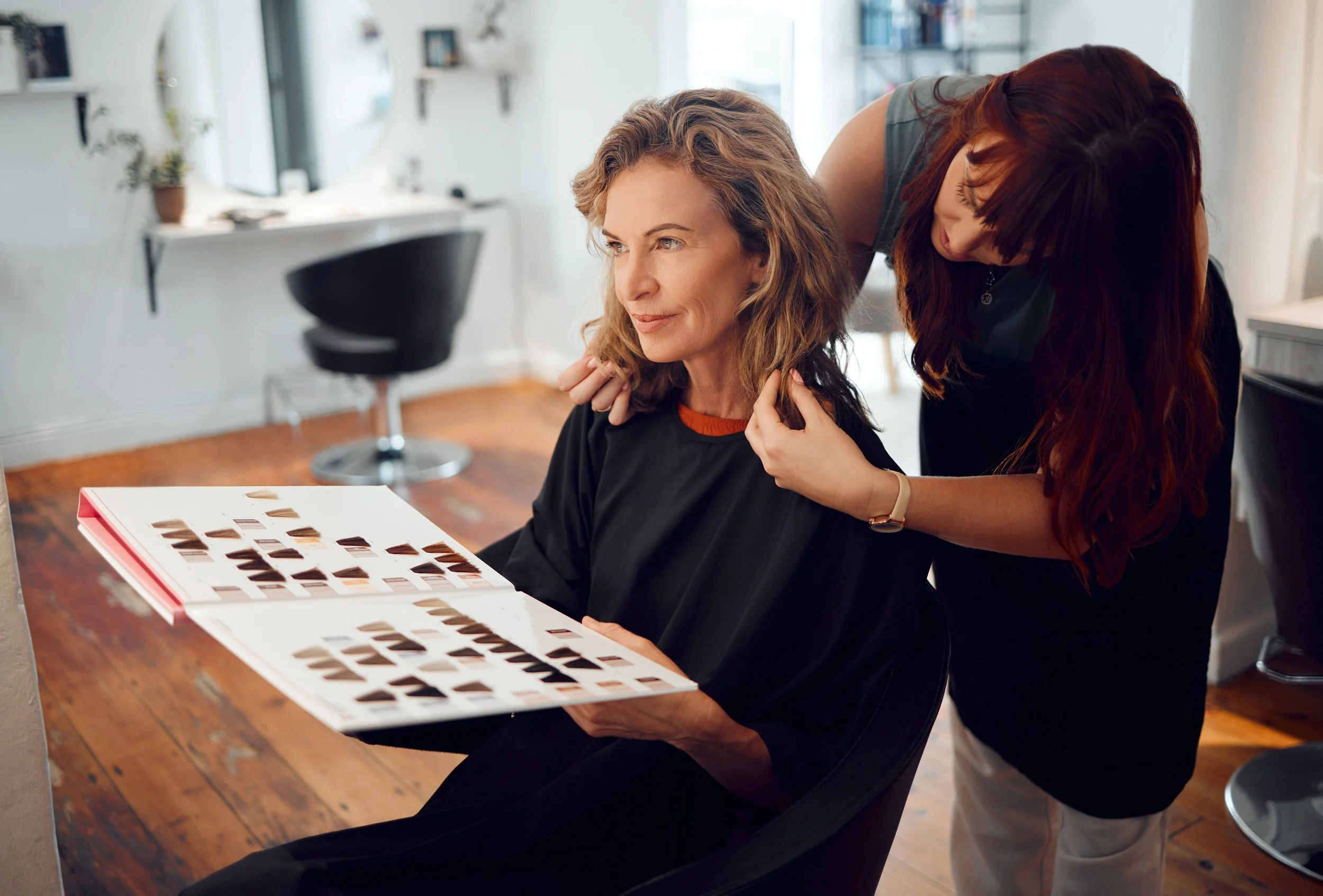
The consultation is a structured professional evaluation, not a casual conversation. Your colorist examines your hair in natural light to assess porosity and elasticity, both of which affect how color lifts and deposits. They ask about your full chemical history, including box dye, bleach, relaxers, or perms. Your natural undertone is evaluated to predict how the formula will perform. If you're planning a major change, your colorist may recommend a strand test on a small hidden section before committing to a full application. Scalp sensitivity factors are also noted at this stage.
How long does a hair color appointment take?
Time varies by service. A single-process color or toner refresh typically runs one and a half to two hours. Precision highlights take two to three hours. Balayage appointments range from three to four hours. Color correction can take four to six hours or more, depending on the starting point and goal. Within every service, processing time alone accounts for 30 to 45 minutes. Blow-dry and styling add another 30 to 45 minutes. For any complex service, plan to keep the rest of your day open. Your colorist will confirm a realistic time estimate during the consultation.
The difference between a color consultation and a walk-in appointment
Walk-in appointments assume the service is already determined. A standalone color consultation works differently. It gives your colorist time to evaluate your hair without appointment-day pressure, discuss your goals, establish a realistic formula plan, and review pricing with full transparency before any commitment is made. For first-time professional color clients, the consultation is especially valuable because it eliminates guesswork on both sides. Technique, maintenance expectations, and timing are all set before you return for the actual service. In Chicago salons where color work is highly customized, this model consistently produces better outcomes than same-day assessment and application.
What to tell your colorist, and what not to leave out
Full disclosure of your hair history is a professional safety requirement. Tell your colorist about every chemical treatment your hair has received, including box dye, bleach, relaxers, keratin treatments, or perms, even if it was years ago. If you are on medications that affect scalp chemistry, including Accutane or blood thinners, mention them before the appointment begins. Share inspiration photos, and be direct about what you don't want. If your goal involves a dramatic lift from dark hair, ask your colorist for an honest assessment of what's achievable in a single visit. Transparency produces better results than assumptions on either side.
What actually happens when color is processed, and why you wait
During processing, the developer opens the hair cuticle so pigment can penetrate the cortex and bond with the hair's internal structure. The length of the processing window is set by your colorist based on formula strength, desired lift, and your hair's current condition. It is not arbitrary. Cutting processing short degrades the result. Your colorist monitors throughout. Once rinsing is complete, a toner or gloss is often applied to neutralize unwanted warmth or brassy tones and refine the final shade. This stage is an ideal time to relax. Bring headphones, a book, or simply enjoy the quiet.
How to care for your color in the first 48 to 72 hours
The 48- to 72-hour window after a color appointment is the most critical for color retention. The hair cuticle is still partially open, and the color is still undergoing oxidation. Washing during this window disrupts both. When you do wash, use only cool or lukewarm water and a sulfate-free shampoo. Hot water forces the cuticle open and accelerates fading. Avoid heat styling for the first two to three days. Skip pools, saltwater, and workouts that produce heavy sweat. A rinse-out color gloss used at home during this period can help lock in vibrancy as the cuticle closes.
Long-term maintenance: when to come back and what to book
Maintenance frequency depends on the service you received. Single-process and root touch-up clients typically return every four to six weeks. Clients with precision highlights generally return every 8 to 12 weeks. Balayage clients often go twelve to sixteen weeks or longer between full appointments. A toner or gloss refresh can extend vibrancy between sessions without the full commitment of a color appointment. Pre-booking your next visit before you leave the salon is the most reliable way to secure your preferred time and colorist. Color longevity is also directly tied to home care, so the conversation you have before leaving the chair matters.
Questions to ask your colorist before you leave the chair
Before you stand up, ask your colorist to list any products used during the appointment so you can replicate the at-home care routine. Ask how they would describe the technique in their own words, which is useful context for future appointments, regardless of where you go. Ask what to expect over the first few washes as the color settles. Ask when they recommend your next visit and what service to book. Ask how to style the result at home without compromising longevity. These are not intrusive questions. They are standard practice for building a productive, long-term colorist relationship.
What makes the CM Salon's approach to first-time color clients different
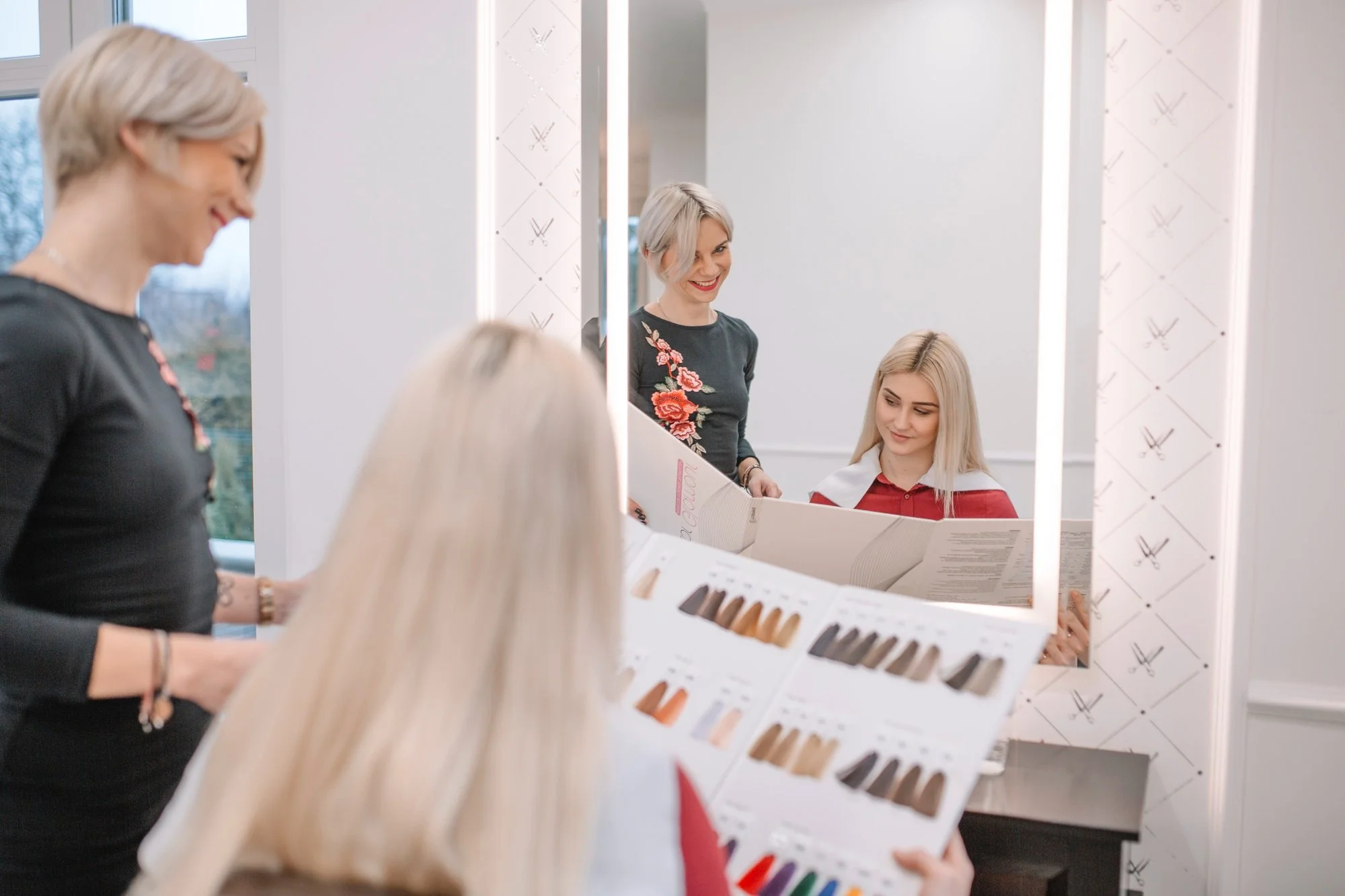
At CM Salon & Spa in Lakeview, first-time clients receive a complimentary color consultation before any service commitment is made. The session includes a hair condition assessment, color history review, goal-setting conversation, technique selection, and a transparent pricing overview. Our colorists are trained hair color specialists with backgrounds in editorial and advanced techniques. Every formula is built from your individual hair assessment, not a template. Our salon's Lakeview location serves clients across Chicago's North Side and is, by design, a consultation-first practice rather than a concession to walk-in demand.
Conclusion
A first hair color appointment in Chicago is straightforward when you know what each stage involves. Arrive with dry, product-free hair, share your full hair history with your colorist, and ask questions before you leave. The consultation stage is where results are actually determined, not the application. Good aftercare in the first 48 to 72 hours protects the investment you've made. Our complimentary consultation is designed for exactly this moment in the color journey, when a first-time client needs a real assessment, not a sales pitch, before committing to a service.
Frequently Asked Questions
-
Appointment length depends on the service. A single-process color or toner refresh typically runs one and a half to two hours. Precision highlights take two to three hours. Balayage appointments generally require three to four hours. Color correction is the most time-intensive service and can take four to six hours or more, depending on your starting point and goal. Within each service, processing time alone takes 30 to 45 minutes, and blow-drying and styling add another 30 to 45 minutes. Your colorist will confirm a realistic time estimate during the consultation, so plan to keep your schedule flexible for complex services.
-
Do not wash your hair within 24 to 48 hours before the appointment. Natural scalp oils act as a protective barrier against developer, reducing scalp sensitivity and helping color absorb more evenly. Arrive with dry, product-free hair. If you have significant product buildup from dry shampoo or heavy styling products, a gentle wash 24 hours prior is acceptable, but avoid washing on the morning of the appointment. Skip heavy conditioners entirely on the day of the appointment, as they can coat the hair shaft and interfere with formula penetration. Your colorist will work with your natural hair state.
-
Bring three to five inspiration photos showing colors you like and one or two showing directions you want to avoid. If you have a record of previous chemical treatments, including box dye, bleach, or relaxers, bring that information or be ready to discuss it. Wear a dark or older top since color can occasionally transfer during application. If you have known allergies or are on medications that affect scalp chemistry, note those before arriving. Bringing headphones or something to keep you occupied during processing is also a practical choice, particularly for longer appointments involving balayage or highlights.
-
A strand test applies a small amount of formula to a hidden section of hair before full application. It checks how the hair responds in terms of lift, tone absorption, and structural integrity. A strand test is recommended for major color changes, first-time bleaching, or any client with an unknown or complex chemical history. A patch test, applied to the skin rather than the hair, checks for an allergic reaction to the developer. Both are brief procedures conducted either at the appointment or up to 48 hours prior. Your colorist determines whether a strand test is warranted based on the assessment during your consultation.
-
Use a sulfate-free shampoo exclusively after your color appointment. Sulfates strip pigment from the hair shaft with every wash. Wash in cool or lukewarm water, as hot water opens the cuticle and accelerates color loss. Minimize heat styling or use a heat protectant every time. Avoid chlorinated pools and prolonged sun exposure, both of which oxidize and fade color. A color-depositing gloss or toner used at home between appointments can refresh tone without a full salon visit. Deep conditioning weekly helps maintain hair integrity and keeps color looking vibrant longer between professional treatments.
-
CM Salon & Spa offers a complimentary color consultation for all new clients. The session covers hair condition assessment, color history review, goal-setting, technique selection, and a transparent overview of pricing, all before any service commitment is made. It is designed as a standalone appointment that precedes the first color service, particularly for clients considering a major change or booking professional color for the first time. The consultation removes the pressure of making an on-the-spot decision and gives your colorist the full picture they need to build a formula that works for your specific hair, not a generic starting point.
